

By Stephanie Heredia, Administrator, Serenity Living Home Care. Last updated: October 2026.
Hi, I’m Stephanie. I run two small assisted living homes in Palm Beach Gardens that offer memory care, and almost every family who calls me about a parent living with dementia asks the same question in a quiet voice: “How do we know when it’s time?” There’s rarely one clear moment. Usually it’s a pile of small things, and a feeling you can’t shake.
Here are the seven signs I see most often, based on guidance from the National Institute on Aging and the Alzheimer’s Association and on what families tell me. I’m not a doctor, so talk with your loved one’s physician too. But if several of these sound familiar, it may be time to consider memory care.
When Is It Time for Memory Care?
It may be time for memory care when dementia makes it unsafe for your loved one to live at home, when they need help with most activities of daily living, or when family caregivers can no longer keep up safely. Wandering, falls, missed medications and caregiver exhaustion are the most common signs.
Memory care is a type of assisted living for people with dementia and other forms of memory loss. It adds closer supervision, calm routines and caregivers who understand how dementia changes behavior. If you’re not sure how it differs from other senior living, read my guide to memory care vs. dementia care vs. assisted living. We also cover how dementia affects the mind and body, staying in touch with a loved one and making visits with aging parents count.
7 Signs It May Be Time to Consider Memory Care for a Loved One Living with Dementia
The common signs that it’s time for memory care are safety risks at home, wandering, declining personal care, medication mistakes and weight loss, changes in behavior, growing isolation, and a family caregiver who is worn out.
Alzheimer’s disease is the most common cause of dementia, but there are other forms of dementia too, and each affects memory, cognition and behavior differently. You may notice that your loved one seems fine during a short visit and very different at night. Signs that indicate it may be time often show up slowly, so keep a simple notebook of what you see. Here are the signs that may indicate it’s time to consider memory care:
1. Safety at home is slipping
The stove left on. The front door unlocked at night. Falls nobody saw. Scams on the phone. When safety becomes a daily worry, your loved one needs more supervision than a few visits a day can give. This is often the first sign families notice.
2. Wandering or getting lost
According to the Alzheimer’s Association, six in ten people living with dementia will wander at least once. Getting lost on a familiar drive, leaving home at 3 a.m., or trying to “go home” while already home are all red flags. Wandering is one of the strongest signs that it’s time to consider memory care.
3. Needing more help with activities of daily living
Wearing the same clothes for days, skipping baths, or struggling with toileting and incontinence usually means your loved one needs hands-on help with activities of daily living. Urinary incontinence is common as dementia progresses, and many people with dementia are embarrassed and hide it, so look at the laundry and the bathroom, not just the person.
4. Medication mistakes, missed meals and weight loss
Double doses, missed pills, an empty fridge or noticeable weight loss are common in mid-stage dementia. Medication errors can be dangerous, and poor nutrition affects health and well-being quickly.
5. Changes in behavior, mood or sleep
Agitation, aggression, anxiety, suspicion, or confusion that gets worse in the late afternoon (often called sundowning) can be hard to manage at home. The National Institute on Aging notes that moderate dementia often brings these behavior changes, along with sleep problems and more need for supervision.
6. Growing isolation and loneliness
Many people living with dementia stop calling friends, quit hobbies and spend most of the day alone. Social isolation can make confusion and mood worse. A small memory care home offers company, structure and purposeful activities every day.
7. The family caregiver can no longer take good care of them, or of themselves
This is the sign families feel guiltiest about, and it matters most. If you’re not sleeping, your own health is slipping, your job or marriage is suffering, or you’re afraid of what happens when you’re not there, it may be time to make the transition. Dementia caregiving is a marathon, and caring for a loved one around the clock affects your own mental health. Family caregivers deserve compassion and support too. When your loved one’s needs are bigger than one person, professional dementia care isn’t a failure; it’s how your loved one receives the care they need.
Memory Loss or Daily Living Needs? How to Know It’s Time for Memory Care, Not Assisted Living
Choose memory care over standard assisted living when memory loss affects safety and judgment, such as wandering, getting lost or not recognizing danger. Assisted living fits people who mainly need help with daily living but can still make safe choices.
My two cents: families usually wait too long, out of love and guilt, and often because the parent refuses to talk about it. I understand. But a move made calmly, before a crisis or a hospital stay, is almost always easier on everyone. Many families make the transition from independent living or from their own home straight to memory care. If your loved one needs daily skilled nursing for other health conditions, a nursing home may be the right place instead; a hospital social worker or your doctor can help you sort out the level of care needed. If you’re still not sure whether it’s dementia or normal aging, read about the difference between memory loss and dementia, and ask the doctor for an evaluation.
What Residential Memory Care Provides: Dementia Care in Palm Beach Gardens
Residential memory care provides supervision around the clock, help with personal care, medication management, meals, and calm daily routines and activities designed for people with dementia, in a safe setting where staff understand the disease.

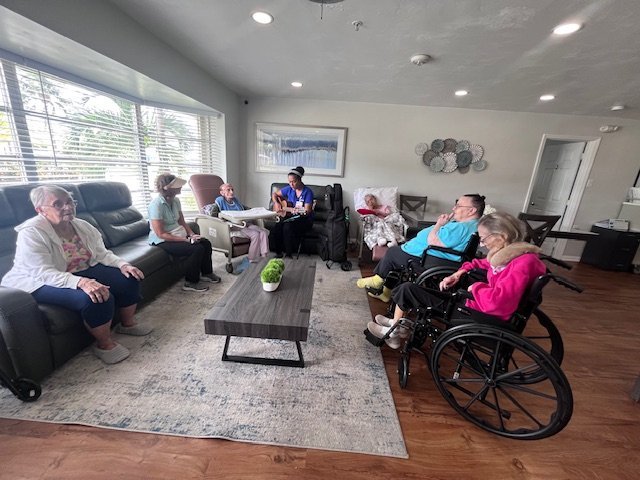
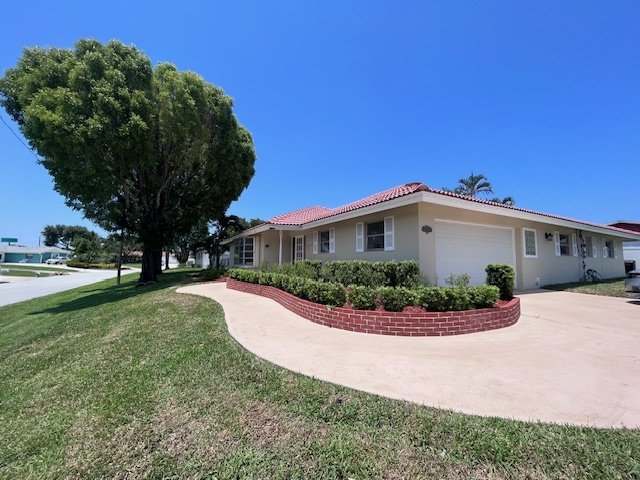
At our two Palm Beach Gardens homes, memory care means a real house on a quiet residential street, with caregivers in the home around the clock. Memory care programs are designed around routine and familiarity, and here’s how we provide care with that specialized care approach:
- Help with bathing, dressing, grooming and toileting, at your loved one’s pace
- Medication management, so nothing is missed or doubled
- Home-cooked meals adapted to each resident’s diet
- Activities like music, crafts, puzzles, word games, chair exercise and brain games
- Coordination with doctors, home health, therapy and hospice providers
- Short respite stays, when we have a room open, so family caregivers can rest
We’re a non-medical home, so we don’t provide skilled nursing. If a loved one’s needs become more than we can safely meet, I’ll tell you honestly. Memory care at our homes runs about $6,000 to $7,000 a month, depending on care needs and room type; I explain the details in how much memory care costs in Palm Beach Gardens. Some families use long-term care insurance; if money is the worry, see my options when you can’t afford assisted living. You can also read about our memory care services.
How to Find the Right Care Facility: Comparing Memory Care Facilities and Care Options
To find the right memory care, tour at least two or three homes, ask about staffing, dementia training and daily routines, check state inspection reports, and watch how caregivers talk to residents. The right fit feels calm, clean and kind.
In Florida, assisted living facilities, including memory care facilities, are licensed by the Agency for Health Care Administration, and you can look up any care facility on FloridaHealthFinder.gov. When you tour, ask:
- How many caregivers are awake and on duty overnight?
- What dementia training does the care staff have?
- How do you handle wandering, agitation and sundowning?
- How will you keep me updated?
- What happens if care needs change over time?
Bring my tour checklist, and use my 15 questions for choosing memory care as well.
How to Move a Loved One into Memory Care
To move a loved one into memory care, talk with their doctor, complete the required medical exam, bring familiar belongings, keep the first weeks simple and visit often. Many people with dementia settle in within a few weeks.
Choosing a memory care community or a small home is never easy, and helping a loved one move into a memory care home can be difficult for everyone. Making the decision to move a loved one can feel like a betrayal. It isn’t. Keep explanations short and kind, bring photos, a favorite blanket and familiar clothes, and let caregivers learn your loved one’s routine. If your parent resists, my post on how to talk to your parents about a residential care home may help.
Local help for families in Palm Beach County: the Alzheimer’s Association 24/7 Helpline at 1-800-272-3900, and the Area Agency on Aging of Palm Beach/Treasure Coast Helpline at 1-866-684-5885 for caregiver support and respite programs.
Frequently Asked Questions About Memory Care
Do people with dementia do better at home or in memory care?
It depends on the person and the support at home. Many people do well at home early on. As dementia progresses, a safe, structured setting with trained caregivers often helps people with dementia feel calmer, eat better and enjoy more activity.
How long do residents stay in memory care?
It varies widely with health and the stage of dementia. At our homes, residents stay about 18 months on average.
Can we tour first?
Please do. I give every tour myself, any day from 9 a.m. to 6 p.m., and we can set up a virtual tour for families out of town.
Talk to Me About Dementia Care in Palm Beach Gardens
If you’re wondering whether it’s time for memory care, you don’t have to decide alone. Call me at (561) 354-3476 or contact us, and I’ll listen, answer honestly and show you our Buttercup Circle home and Holly Drive home.
Warmly,
Stephanie